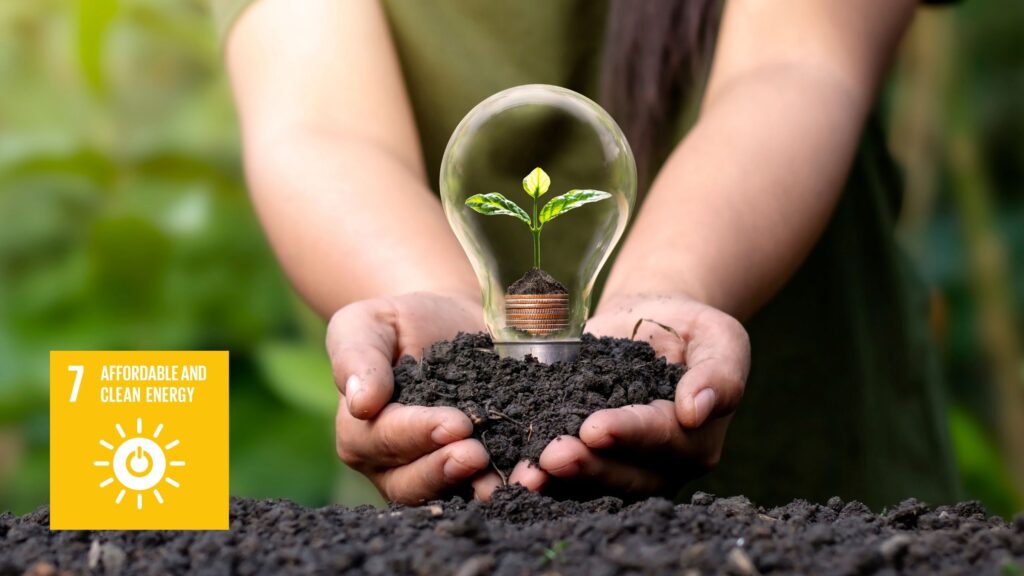
SDG 7 – Affordable and Clean Energy – An Update

Dear Mankind and most favoured of my children

You will recall my earliest blogs ( mother Earth blogs ) welcomed the Global initiative to develop the Sustainable Development Goals ( SDGs) to help create a safer and fairer world and I was happy that mankind had at last understood the need to live more sustainably and harmoniously with other living things on this, our only, home. Some good progress was starting to be being made in some areas but sadly most of this encouraging activity was brought to an abrupt halt or in some cases , even reversed by the COVID 19 Pandemic

This blog on SDG 7 – Affordable and Clean Energy is the next in a series of updates to review the effects of the COVID 19 pandemic on the aspirations and targets of each of the original 17 SDGS and to look ahead to the prospects in each sector

The Pandemic has had an unprecedented economic and human toll on Human societies around the world . Progress was being made during last Decade in providing access to electricity. Globally access improved from 83% in 2010 to 90% in 2019 resulting in 1.1billion people receiving electricity for the first time . However even then ,759 million were still without access by 2019 and over 1/3rd of global population still lacked access to clean cooking fuels and technologies

The Pandemic has reversed the progress made and millions have now lost access to electricity. In most of Africa and Asia basic electrical services have become unaffordable and more than 25 million people who previously had access have now lost it and another 80 million are having to scale back use of electricity because of rising costs . In 2010 only 57% of global population was using clean fuels / technologies and this had increased to 66% by 2019 . However this still left 2.6 billion people without access to clean fuels many of whom live in sub–Saharan Africa where 85% of the population still rely on inefficient or dangerous cooking systems.

Concerted action and substantial investment is needed in this sector if Global targets are to be met especially in the least developed countries which are falling further and further behind . At present rate of progress there will still be 660 million without access to electricity by 2030

Mother Earth
Sources : The Sustainable Development Goals Reports 2019 -2021 , United nations, New York

SDG6, Clean Water and Sanitation – An Update

Dear Mankind and most favoured of my children

You will recall my earliest blogs ( mother Earth blogs ) welcomed the Global initiative to develop the Sustainable Development Goals ( SDGs) to help create a safer and fairer world and I was happy that mankind had at last understood the need to live more sustainably and harmoniously with other living things on this, our only, home. Some good progress was starting to be being made in some areas but sadly most of this encouraging activity was brought to an abrupt halt or in some cases , even reversed by the COVID 19 Pandemic

This blog on SDG6 -Clean Water and Sanitation is the next in a series of updates to review the effects of the COVID 19 pandemic on the aspirations and targets of each of the original 17 SDGS and to look ahead to the prospects in each sector

The Pandemic has had an unprecedented economic and human toll on Human societies around the world and especially so on those without the facilities to reduce their risk of contracting the virus. Billions live without safe drinking water , sanitation and hygiene services and these deficiencies and inequalities have been brutally exposed by the Pandemic. During 2015-2020 the proportion of global population with safe drinking water increased from 70.2% to 74.3% . Despite this 2 billion people still had no safe water in 2020 and 77 million were without even basic drinking water to meet their daily needs

The proportion of global population with safe sanitation increased from 47.1% in 2015 to 54% by 2020 but in that year 3.6 billion still lacked safe sanitation and 1.7 billion were without even basic sanitation facilities . In addition, although those with access to basic hygiene facilities rose from 67.3% in 2015 to 70.7% in 2020 , there were , in that year , 2.3 billion persons ( 1 in 3 ) still lacking basic handwashing facilities with soap and water at home. In addition there were 670 million with no handwashing facilities at all – very significantly increasing their risk of contracting and spreading the virus within their communities.

Globally only 2 in 3 schools had basic drinking water and only 3 in 5 schools had basic hygiene facilities by 2019. This means that 818 million children lacked basic hand washing capability at their schools. In developing countries only 1 in 2 health care centres had basic water services and only 3 in 4 had basic hygiene services – adding to their problems of trying to minimise infections during the pandemic and increasing risks to those communities

Fresh water eco systems are also changing drastically with 20% of world river basins experiencing rapid changes in surface water areas. Natural wetlands are also in long term decline with 80% of wetlands lost since the pre- industrial era and coastal mangroves also in decline. Unless there is better management of transboundary water basins , integrated management of water sources and more sustainable use of water, violent conflicts are certain to occur between neighbouring countries over access to fresh water sources

Mother Earth
Sources : The Sustainable Development Goals Reports 2019 -2021 , United nations, New York