SDG 10 – Reduced Inequalities
Earth year 4,492,056,017
Mother Earth / Gaia‘s Blog
Mankind, My children
In my first blog post I asked that you commit to following my blog for the next few weeks to give me a chance to explain the most important issues affecting our joint survival. Subsequent Blogs have started to give you some facts about the biggest and most important Global issues that need to be addressed. In today’s Blog post I want to talk about the need to Reduce Inequalities.
The Problem
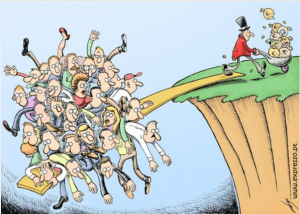
Income inequality has increased in recent decades. More than 75% of population now lives in societies where income distribution is now more unequal than it was 29 years ago in 1990. The richest 1%now own 45% of the world’s wealth and the rich continue to get richer while the poor get poorer. Inequality harms growth, poverty reduction and relations between persons and is a threat to long term social and economic development. Children in the poorest 20% of populations are 3 times more likely to die before their 5th birthday than the children of richest 20%. Persons with disabilities are up to 5 times more likely than the average person to incur catastrophic health costs. Income inequality can only be tackled if inequality of opportunity is addressed.
Do you feel guilty about the struggles of the poor in developing countries trying to feed their families and the inequality and unfairness that denies opportunities to hundreds of millions in much of the world? Are you frustrated at the lack of progress in helping the poor? Now is your chance to do something to change the world!
The facts
- 75% of persons now live in societies where income distribution is more unequal
- 736 million live in extreme poverty and live on less than US$ 1.90 per day
- Children of the poorest 20% are 3 times more likely to die before age of 5 than those of richest
- Disabled persons are 5 times more likely to incur catastrophic health costs
WCYDo (wich-ee-do – What Can You Do?)
Buy fair trade fruit and products to help poor suppliers achieve more income
- Support use of official aid to promote fairness and equality in developing world
- Support charities such as www.epi.org
- Write to your politicians to increase aid and trade with developing world
- Share the facts about inequalities with family and friends.
Encourage others to join us and to visit our Facebook Page to sign up for our newsletter and information about our proposed WCYDo APP. See you next week on a new blog post!