Dear Mankind and most favoured of my children
You will recall my earliest blogs ( mother Earth blogs ) welcomed the Global initiative to develop the Sustainable Development Goals to help create a safer and fairer world and I was happy that mankind had at last understood the need to live more sustainably and harmoniously with other living things on this, our only, home planet. Some good progress was starting to be being made in some areas but sadly most of this encouraging activity was brought to an abrupt halt by the COVID 19 Pandemic
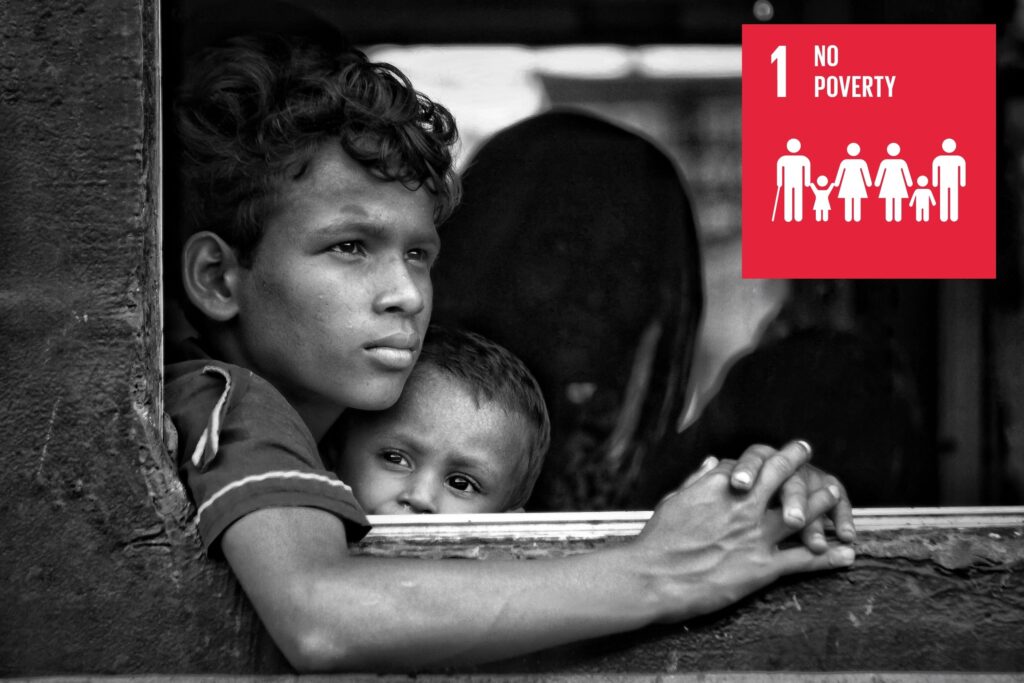
This blog on SDG 1– Poverty is the first of a series of updates to review the effects of the COVID 19 pandemic on the aspirations and targets of each of the original 17 SDGS and to look ahead to the prospects in each sector
The Pandemic has had an unprecedented economic and human toll on Human societies around the world. Millions have died , tens of millions will have recurring health problems , $billions have been lost and many of the promising development gains of recent decades have been stalled or even reversed.
The numbers in extreme poverty ( living on $1.90 per day) has actually increased for the first time in 20 years and has wiped out all the hard-won gains made in recent decades Between 2010 and 2019 the global population in extreme poverty fell steadily from 14% to about 6% but (as a result of the Pandemic) an additional 119-124 million were pushed back into extreme poverty in 2020 increasing those in extreme poverty to 738 million . The Pandemic intensified inequalities within and amongst countries and also exposed deep-rooted problems such as inadequate health coverage and lack of social welfare. This has brought additional financial pressures on many – especially to those in lower income countries where there are few or no social protection systems.
Although social protection measures are common in the high-income countries ( HICs) and around 85% of their populations have at least 1 social protection support measure , in low- income countries (LICs) only 13.4 % have such support and for the vulnerable persons in such countries, only 7.8% have any support leaving them badly exposed when unexpected emergencies occur. Hence, although 49% of the Global population is covered by some social protection , this still leaves 4 billion people without any such protection – and most of these are in low-income countries.
Despite working hard to survive, around 1/3rd of people in employment in the developing world remain in extreme poverty and even there, inequalities and gender gaps remain between men and women . Around 33% of women in employment actually live in extreme poverty whereas for men, the percentage is 28.3%.. Most sadly, the aspirational target to eliminate extreme poverty completely by 2030 as included in the original SDGs now looks to be out of reach and it is now expected that there will still be 7% of the global population in extreme poverty in 2030
Mother Earth
Sources : The Sustainable Development Goals Reports 2019 -2021 , United nations , New York