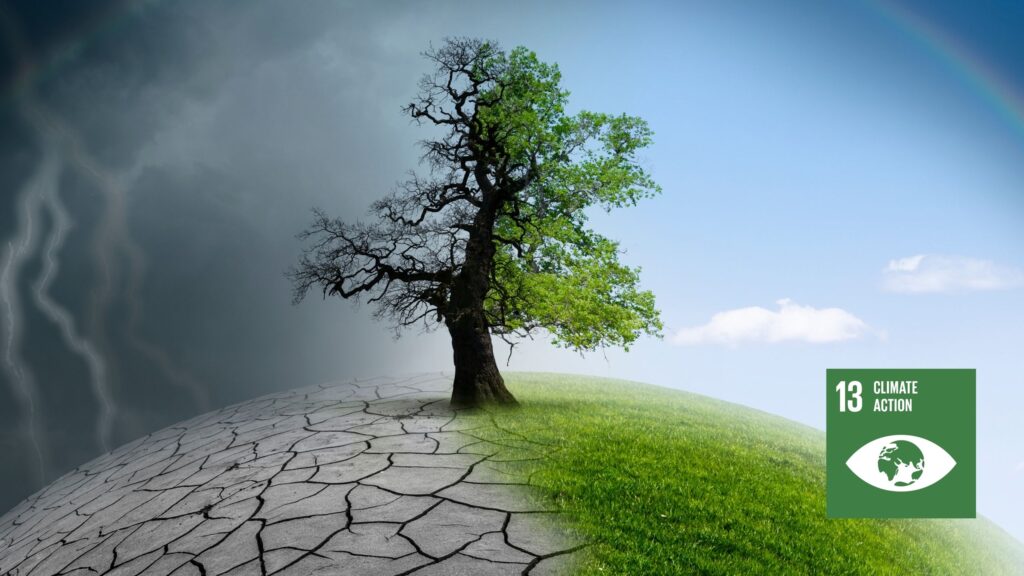
SDG13, Climate Action – An Update

Dear  Mankind and most favoured of my children 

You will recall my earliest blogs ( mother Earth blogs ) welcomed the Global initiative to develop the Sustainable Development Goals ( SDGs)  to help create a safer and fairer world and I was happy that Mankind had at last understood the need to live more sustainably and harmoniously with other living things on this, our only, home. Some good progress was starting to be being made in some areas but sadly most of this encouraging activity was brought to an abrupt halt  or in some cases, even reversed by the COVID  19 Pandemic. 

This blog on SDG 13 – Climate Action is the next in  a series of updates to review the effects of the COVID 19 Pandemic  on the aspirations and targets of each of the  original 17 SDGS and to look ahead to the prospects in each sector. 

Despite the pandemic related economic slowdown in recent years, the  climate crisis continues largely unabated. Concentrations of greenhouse gases continued to increase in 2020 reaching new record highs and it was one of the 3 warmest years in human record. 

However, climate action is now getting some  momentum. In  June 2020, a campaign was launched to form a coalition of businesses, cities, regions and investors around net zero carbon emissions and initiatives. This  set specific “tipping points” for more than 20 sectors of the Global economy. As of  December 2020, two thirds of the  world’s GDP was being generated in places with actual or intended net 0 targets for 2050. This covers half of the world’s population and emissions and is a  promising development.

In 2015, 196 parties to the Paris agreement committed to transforming their activities  to increase sustainability and called for limiting Global warming to well below 2°C to meet Global carbon dioxide emissions which need to be reduced by 43% by 2030 from 2010 levels so that they can reach net zero emissions by 2050 .  Covid pandemic significantly reduced human activities in 2020, leading to a temporary fall in CO2 emissions mostly in the developed countries but  sadly, despite this temporary reduction, evidence indicates that the Global  concentration levels of CO2, Methane and Nitrous oxide continue to increase in 2020.  By December 2020 emissions had rebounded back  and were registering 2% higher than the same month in 2019.

By May 2021,  192 parties ( including 125 out of 154 developing countries ) of  the Paris  Agreement had  submitted their first voluntary reports ( NDCs) reporting on their  efforts. Increasing numbers of countries are developing  National adaptation plans to boost their efforts to adjust to climate change. This includes building flood defences, early warning systems for cyclones or switching to drought resistant crops. Finance provided by the developed to developing countries has been increasing, reflecting an ongoing commitment to support the global transition to  a low emission / climate resilient future.

Mother Earth  

Sources : extracted from The Sustainable Development Goals Reports 2019 -2021 , United Nations, New York
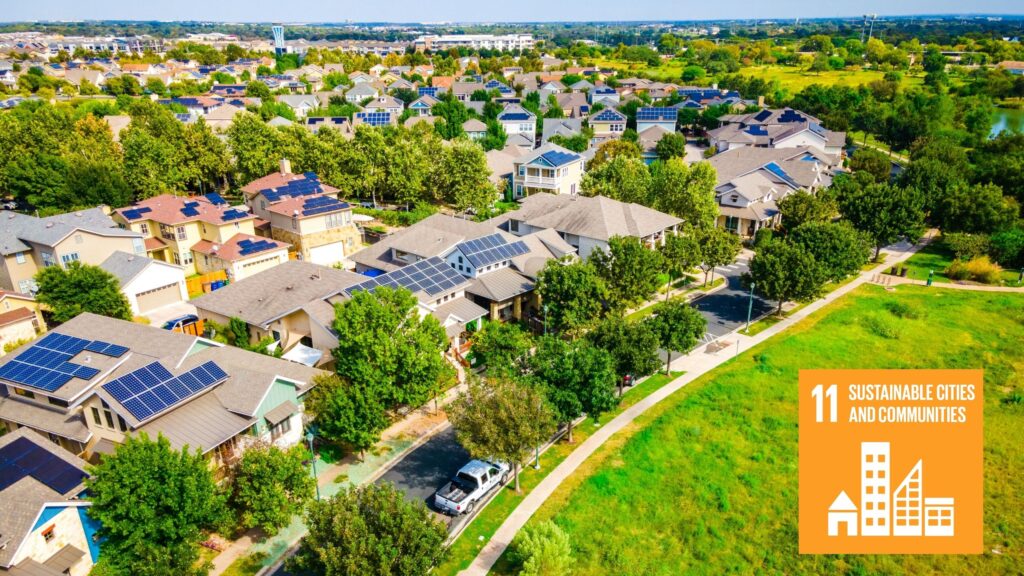
SDG 11- Sustainable Cities and Communities – An Update

Dear Mankind and most favoured of my children

You will recall my earliest blogs ( mother Earth blogs ) welcomed the Global initiative to develop the Sustainable Development Goals ( SDGs) to help create a safer and fairer world and I was happy that mankind had at last understood the need to live more sustainably and harmoniously with other living things on this, our only, home. Some good progress was starting to be being made in some areas but sadly most of this encouraging activity was brought to an abrupt halt or in some cases, even reversed by the COVID 19 Pandemic.

This blog on SDG 11 – Sustainable Cities and Communities is the next in a series of updates to review the effects of the COVID 19 Pandemic on the aspirations and targets of each of the original 17 SDGS and to look ahead to the prospects in each sector.

The Pandemic dramatically exposed the many longstanding inequalities and problems in society and in our urban areas. Lack of adequate housing, poor public health systems, inadequate infrastructure ( roads , water and sewage ) inadequate open public spaces and poor public transport all combined to maximise impact on the most vulnerable and poorest in society such as the homeless , migrants and those living in urban slums..

In the past, insufficient thought or provision was given to the needs of the disadvantaged in urban areas but the Pandemic has starkly demonstrated the inadequacies that have to be improved. Research in 610 cities in 95 countries shows that only about 50% of the world urban population lives within 500 m walking distance of low -capacity transit systems ( buses or trams ) and 1000m walking distance of high- capacity transit systems ( ferry or train ). Commuting to work was severely disrupted during the pandemic. City centre offices closed , roads were empty, congested public transport was to be avoided and many now prefer to work at least part of the time from home. With reduced demand for city centre offices , parking spaces etc many councils have taken the opportunity to reduce parking spaces and to apply partial or full street closures to free up space for walking and cycling

This re-imagining of cities is one of the few positive outcomes from the Pandemic. Civic leaders are recognising the importance of and the need for public open spaces , streets and recreational areas and the need to create more facilities for more sustainable transport modes such as walking and cycling. There is also greater awareness for the need to re shape the city centres to re purpose central business districts to be mixed developments that do not rely on or need congested public transport systems. Research in 2020 in 911 cities in 114 countries indicates that the share of global urban area allocated to streets and open public space is only 16%. This needs to be at least 30% for streets and another 10-15% for open public spaces according to UN Habitat if we are to create more liveable cities that reduce risk and improve health and well -being of city residents.

Between 2014 and 2018 the urban population living in slums worldwide increased from 23% to 24% resulting in 1billion slum dwellers and this will continue to increase in future years to reach 2billion urban slum dwellers by 2030. Their needs must be taken into account

Mother Earth
Sources : The Sustainable Development Goals Reports 2019 -2021 , United nations, New York