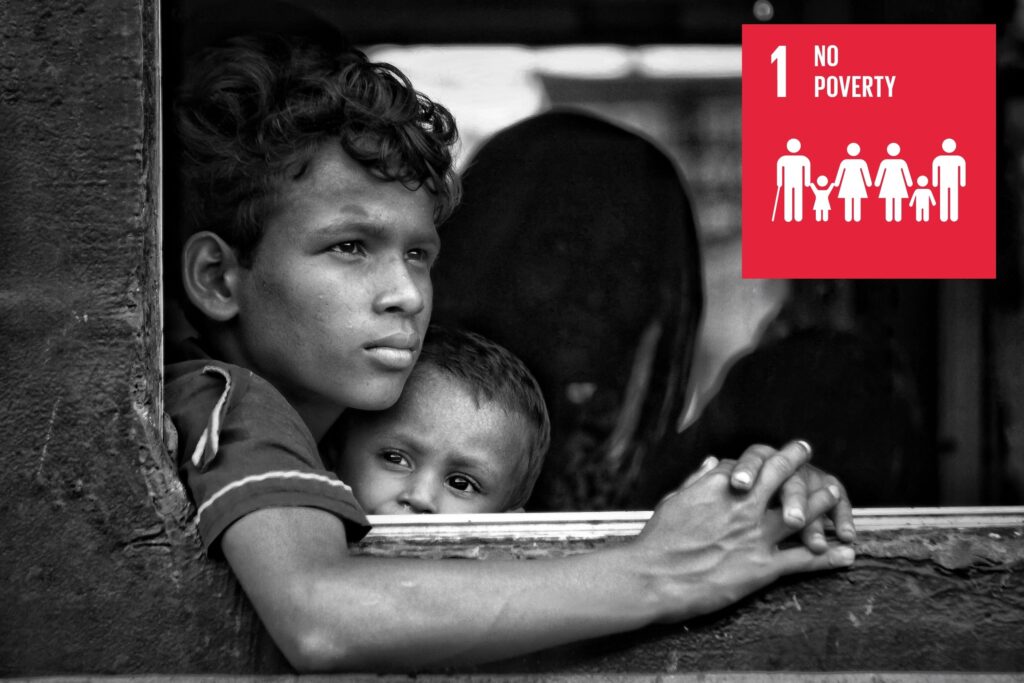
SDG1 Poverty – an Update

Dear Mankind and most favoured of my children

You will recall my earliest blogs ( mother Earth blogs ) welcomed the Global initiative to develop the Sustainable Development Goals to help create a safer and fairer world and I was happy that mankind had at last understood the need to live more sustainably and harmoniously with other living things on this, our only, home planet. Some good progress was starting to be being made in some areas but sadly most of this encouraging activity was brought to an abrupt halt by the COVID 19 Pandemic

This blog on SDG 1– Poverty is the first of a series of updates to review the effects of the COVID 19 pandemic on the aspirations and targets of each of the original 17 SDGS and to look ahead to the prospects in each sector

The Pandemic has had an unprecedented economic and human toll on Human societies around the world. Millions have died , tens of millions will have recurring health problems , $billions have been lost and many of the promising development gains of recent decades have been stalled or even reversed.

The numbers in extreme poverty ( living on $1.90 per day) has actually increased for the first time in 20 years and has wiped out all the hard-won gains made in recent decades Between 2010 and 2019 the global population in extreme poverty fell steadily from 14% to about 6% but (as a result of the Pandemic) an additional 119-124 million were pushed back into extreme poverty in 2020 increasing those in extreme poverty to 738 million . The Pandemic intensified inequalities within and amongst countries and also exposed deep-rooted problems such as inadequate health coverage and lack of social welfare. This has brought additional financial pressures on many – especially to those in lower income countries where there are few or no social protection systems.

Although social protection measures are common in the high-income countries ( HICs) and around 85% of their populations have at least 1 social protection support measure , in low- income countries (LICs) only 13.4 % have such support and for the vulnerable persons in such countries, only 7.8% have any support leaving them badly exposed when unexpected emergencies occur. Hence, although 49% of the Global population is covered by some social protection , this still leaves 4 billion people without any such protection – and most of these are in low-income countries.

Despite working hard to survive, around 1/3rd of people in employment in the developing world remain in extreme poverty and even there, inequalities and gender gaps remain between men and women . Around 33% of women in employment actually live in extreme poverty whereas for men, the percentage is 28.3%.. Most sadly, the aspirational target to eliminate extreme poverty completely by 2030 as included in the original SDGs now looks to be out of reach and it is now expected that there will still be 7% of the global population in extreme poverty in 2030

Mother Earth

Sources : The Sustainable Development Goals Reports 2019 -2021 , United nations , New York
Letter from Mother Earth

Dear Mankind, most favoured of my children ,

I wrote to you some time ago about the dangers and threats to our joint future that your species, the most beloved of my children, had brought about for yourselves , for me and for all who co-exist on this fragile blue planet. I outlined the problems and what needed to be done to create a safer and fairer world for all ( Mother Earth’s blogs ). I really thought things were about to improve and that mankind had at last recognised that they must adopt more sustainable ways of living and learn to live in harmony with the environment and all fauna and flora so that we are not all destroyed. I was encouraged when your species agreed the sustainable development goals ( SDGs) and laid out the path for a more equitable future for all. The fact that all the countries in the world, your political leaders, the biggest companies and organizations around the world had all agreed and committed themselves to take such enlightened action delighted me and made me proud that your species had at last begun to be more responsible and caring about others and our joint future.

Sadly , sometimes events transpire that test our resolve. The rosy picture of the future that I had imagined has been shattered during the last 2 years and much of the ground that was beginning to be gained through the SDGs has been lost due to the covid 19 Pandemic. This event has shown in no uncertain terms just how intimately linked we all are. The fact that a local incident in a poorer country, thousands of miles away can have such a devastating impact worldwide and bring deaths and illness to millions shows why the richer countries need to improve conditions in the less developed world. It has also demonstrated just how much inequality and unfairness still exists in the world and in some cases, has added to such inequalities and unfairness. Even the distribution of and access to the vaccines highlights the continuing disparities and inequities of the world

It is estimated that around 11 billion doses of vaccines are required to vaccinate 70% of the world population ( assuming 2 doses per person ) in order to achieve population-level or “herd” immunity. Although your Pharma industries have done an amazing job in developing vaccines and have manufactured hundreds of millions of doses, it is wealthy countries who have captured an overwhelming share of the benefit. High- and upper-middle-income countries, representing just 20% of the world’s population, have pre bought around 6 billion doses ( 55%) ; but low- and lower-middle-income countries, representing 80% of the population, have secured only around 2.6 billion ( 24%) . In the 29 poorest countries ( home to about 9 % of the world’s population) only 0.3% of the global vaccine doses have been given. As a result only about 8.4 % of people in low-income countries have had at least 1 covid vaccination. Nigeria has only 2% of its population fully vaccinated , Ghana 7.4 % , Kenya 7.2 % More needs to be done to get vaccinations to the low-income countries and for the richer countries it should be seen a matter of self-interest since the reality is “ until all are safe, no one is safe”

A complicating factor is that vaccines distributed to African countries are often close to expiry date so have a short shelf life and their delivery is often erratic. This, added to difficulties of poor infrastructure, lack of refrigeration etc. make efficient distribution and use of vaccines very difficult . Nigeria for example, recently had to destroy more than a million doses of vaccines that were close to expiring and could not be got out to rural areas in time to be used. Until those in the developing world are also protected, the risk of future covid variants and mutations remain a risk for all.

Sadly the momentum that was building on the SDGs implementation prior to the Pandemic has also been lost to some extent and renewed efforts are needed to reinvigorate the momentum that was beginning to occur before the Pandemic started. Over the next few months I will review the current status of progress and the impact of covid 19 on each of the 17 SDGs and provide short updates. I will also identify the potential innovations and developments that show most promise.

Mother Earth

Sources : The Sustainable Development Goals Reports 2019 -2021 , United nations , New York